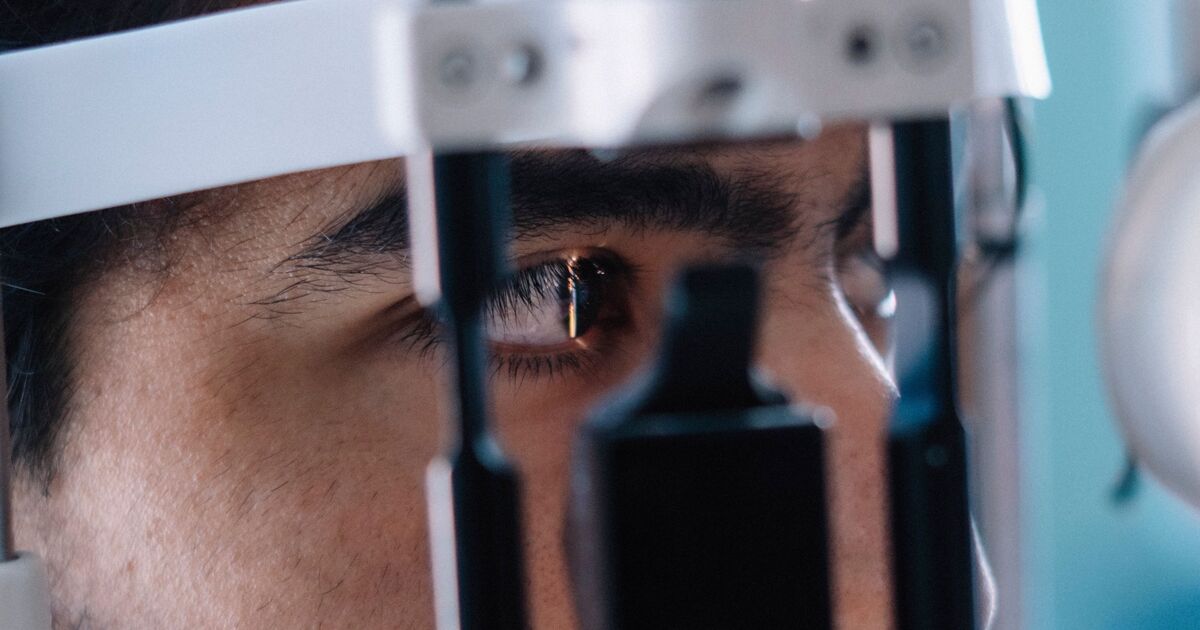
LASIK l Understanding Laser Eye Surgery for Clearer Vision
 Facebook
 Line
Line Twitter
For many people, glasses and contact lenses are part of everyday life. They may be useful for seeing clearly, but some people find them inconvenient when exercising, traveling, working, or enjoying outdoor activities. LASIK is one of the most established options for people who want to reduce their reliance on glasses or contact lenses.
LASIK eye surgery uses laser technology to change the shape of the cornea, helping light focus more accurately on the retina. While the procedure is widely known, it is important to understand that LASIK is not appropriate for everyone. A careful eye examination is needed before deciding whether laser vision correction is suitable.
-------------------------------------------------------------------------------------------------
What Is LASIK Eye Surgery?
LASIK stands for Laser-Assisted In Situ Keratomileusis. It is a refractive surgery designed to correct common vision problems caused by the way the eye focuses light.
The procedure works by carefully reshaping the cornea, the clear surface at the front of the eye. When the cornea has an irregular shape or does not focus light correctly, a person may experience nearsightedness, farsightedness, or astigmatism.
During LASIK, a thin layer of corneal tissue is temporarily lifted so that the surgeon can access the underlying corneal tissue. A laser is then used to reshape this area according to the patient's vision prescription. The flap is placed back into position after the treatment.
Because the treatment is customized for each eye, the results and suitability of LASIK can vary from one person to another.
-------------------------------------------------------------------------------------------------
What Vision Problems Can LASIK Correct?
LASIK is primarily used to treat refractive errors. These occur when light entering the eye does not focus properly on the retina.
- Nearsightedness (Myopia) makes distant objects appear blurry, while objects nearby may remain relatively clear. LASIK can reshape the cornea to improve the way the eye focuses distant images.
- Farsightedness (Hyperopia) can make nearby objects difficult to see clearly and may sometimes affect distance vision as well. Laser treatment can modify the corneal shape to improve focusing.
- Astigmatism occurs when the cornea has an uneven curvature, which can cause blurred or distorted vision at different distances. LASIK may correct the irregular focusing caused by astigmatism.
However, LASIK does not prevent future changes in eyesight. For example, presbyopia, which commonly develops with age, can still occur after LASIK.
-------------------------------------------------------------------------------------------------
How Is the LASIK Procedure Performed?
Before surgery, the ophthalmologist performs a detailed assessment of the eyes. This may include checking the cornea, measuring the current prescription, assessing tear production, and looking for any conditions that could affect the outcome.
If the patient is considered a suitable candidate, the actual LASIK procedure is usually relatively quick.
Numbing eye drops are applied before treatment. The surgeon then creates a thin corneal flap, commonly using a femtosecond laser. Once the flap is gently moved aside, an excimer laser removes a precisely calculated amount of corneal tissue to change its shape.
After the laser treatment is complete, the corneal flap is returned to its original position. It naturally adheres to the underlying tissue, so stitches are generally not needed.
Although the procedure itself may take only a short time, patients should allow additional time for preparation and post-operative assessment.
-------------------------------------------------------------------------------------------------
Who Can Have LASIK?
Being an adult who wears glasses or contact lenses does not automatically mean that you are a LASIK candidate.
An ophthalmologist will consider several factors before recommending the procedure. These include the stability of your prescription, the thickness and shape of your cornea, tear-film condition, and the overall health of your eyes.
Certain eye conditions may increase the risks associated with LASIK. People with significant corneal abnormalities, uncontrolled eye conditions, or severe dry eye may not be suitable candidates.
Vision can also temporarily change during pregnancy and breastfeeding. For this reason, elective refractive surgery may need to be postponed until vision has returned to a stable state.
The most reliable way to determine eligibility is through a comprehensive examination rather than relying on prescription strength or age alone.
-------------------------------------------------------------------------------------------------
What Are the Advantages of LASIK?
The biggest attraction of LASIK for many patients is the potential to see clearly without depending heavily on glasses or contact lenses.
This can make everyday activities more convenient. People who participate in sports may find it easier to exercise without worrying about glasses, while frequent travelers may appreciate having fewer vision-correction items to carry.
Another advantage is that visual improvement can occur relatively quickly. Many patients notice a significant difference shortly after treatment, although complete stabilization can take longer.
LASIK is also designed to provide long-term correction of the refractive error that was treated. Nevertheless, eyesight can change naturally over time, so having LASIK does not guarantee perfect vision for the rest of a person's life.
-------------------------------------------------------------------------------------------------
Are There Any Risks of LASIK?
Like any surgical procedure, LASIK has potential risks and side effects. Understanding these possibilities is an important part of deciding whether to proceed.
Some patients experience dry eyes, temporary blurry vision, sensitivity to light, glare, halos around lights, or difficulty seeing clearly at night. These effects may improve as the eyes recover, but their duration can differ between individuals.
In less common situations, patients may experience persistent visual symptoms or complications that affect the quality of vision. Some people may also require additional treatment if the desired correction is not fully achieved.
A detailed pre-surgery examination helps identify factors that may increase risk. Patients should also discuss their expectations openly with their ophthalmologist before making a decision.
-------------------------------------------------------------------------------------------------
LASIK Recovery: What Should You Expect?
One of the reasons LASIK is popular is its relatively short recovery period. However, this does not mean that the eyes immediately return to normal after surgery.
Vision may initially appear hazy or fluctuate during the first few days. Mild irritation, watering, sensitivity to light, or a feeling similar to having something in the eye can also occur.
Following the post-operative instructions carefully is essential. Patients are usually advised not to rub their eyes and may need to use prescribed eye drops. Protective eye shields may also be recommended during sleep during the early stages of healing.
Certain activities, particularly swimming and contact sports, may need to be avoided temporarily. Follow-up appointments allow the ophthalmologist to monitor healing and vision.
Even when vision improves quickly, the eyes can continue to stabilize for several weeks or months.
-------------------------------------------------------------------------------------------------
LASIK, PRK, and SMILE: How Are They Different?
LASIK is only one of several procedures available for laser vision correction. PRK and SMILE are other options that use different techniques.
The main difference is how the corneal tissue is accessed and treated. LASIK involves creating a corneal flap. PRK does not create this type of flap and instead treats the surface layer of the cornea. SMILE uses a small incision through which a small piece of corneal tissue is removed.
There is no single procedure that is best for every patient. Corneal thickness, eye condition, prescription, lifestyle, and other individual factors all play a role in choosing the appropriate treatment.
A consultation with an eye specialist can help compare the available procedures based on your specific needs.
-------------------------------------------------------------------------------------------------
Is LASIK Worth Considering?
For suitable candidates, LASIK can provide a convenient way to reduce dependence on glasses and contact lenses. Its established track record and relatively quick visual recovery make it an attractive option for many people with refractive errors.
However, LASIK should not be viewed simply as a way to stop wearing glasses. The condition of the eyes, realistic expectations, potential risks, and long-term vision changes should all be considered.
If you are thinking about LASIK eye surgery, start with a comprehensive eye examination. Your ophthalmologist can determine whether your eyes are suitable, explain what results you can realistically expect, and discuss whether LASIK or another vision correction procedure would be a better choice.
-------------------------------------------------------------------------------------------------
Conclusion
LASIK has become a popular form of laser vision correction because it can significantly reduce dependence on glasses and contact lenses for many appropriately selected patients. By reshaping the cornea, the procedure can improve vision affected by myopia, hyperopia, and astigmatism.
Even though LASIK is a well-established procedure, individual results are not identical. Careful screening, choosing an experienced eye specialist, and following recovery instructions are important steps toward achieving the best possible outcome.
If clearer vision without constantly relying on glasses or contact lenses is your goal, LASIK may be worth discussing with an ophthalmologist. A thorough evaluation is the best starting point for making an informed decision.
LASIK eye surgery uses laser technology to change the shape of the cornea, helping light focus more accurately on the retina. While the procedure is widely known, it is important to understand that LASIK is not appropriate for everyone. A careful eye examination is needed before deciding whether laser vision correction is suitable.
-------------------------------------------------------------------------------------------------
What Is LASIK Eye Surgery?
LASIK stands for Laser-Assisted In Situ Keratomileusis. It is a refractive surgery designed to correct common vision problems caused by the way the eye focuses light.
The procedure works by carefully reshaping the cornea, the clear surface at the front of the eye. When the cornea has an irregular shape or does not focus light correctly, a person may experience nearsightedness, farsightedness, or astigmatism.
During LASIK, a thin layer of corneal tissue is temporarily lifted so that the surgeon can access the underlying corneal tissue. A laser is then used to reshape this area according to the patient's vision prescription. The flap is placed back into position after the treatment.
Because the treatment is customized for each eye, the results and suitability of LASIK can vary from one person to another.
-------------------------------------------------------------------------------------------------
What Vision Problems Can LASIK Correct?
LASIK is primarily used to treat refractive errors. These occur when light entering the eye does not focus properly on the retina.
- Nearsightedness (Myopia) makes distant objects appear blurry, while objects nearby may remain relatively clear. LASIK can reshape the cornea to improve the way the eye focuses distant images.
- Farsightedness (Hyperopia) can make nearby objects difficult to see clearly and may sometimes affect distance vision as well. Laser treatment can modify the corneal shape to improve focusing.
- Astigmatism occurs when the cornea has an uneven curvature, which can cause blurred or distorted vision at different distances. LASIK may correct the irregular focusing caused by astigmatism.
However, LASIK does not prevent future changes in eyesight. For example, presbyopia, which commonly develops with age, can still occur after LASIK.
-------------------------------------------------------------------------------------------------
How Is the LASIK Procedure Performed?
Before surgery, the ophthalmologist performs a detailed assessment of the eyes. This may include checking the cornea, measuring the current prescription, assessing tear production, and looking for any conditions that could affect the outcome.
If the patient is considered a suitable candidate, the actual LASIK procedure is usually relatively quick.
Numbing eye drops are applied before treatment. The surgeon then creates a thin corneal flap, commonly using a femtosecond laser. Once the flap is gently moved aside, an excimer laser removes a precisely calculated amount of corneal tissue to change its shape.
After the laser treatment is complete, the corneal flap is returned to its original position. It naturally adheres to the underlying tissue, so stitches are generally not needed.
Although the procedure itself may take only a short time, patients should allow additional time for preparation and post-operative assessment.
-------------------------------------------------------------------------------------------------
Who Can Have LASIK?
Being an adult who wears glasses or contact lenses does not automatically mean that you are a LASIK candidate.
An ophthalmologist will consider several factors before recommending the procedure. These include the stability of your prescription, the thickness and shape of your cornea, tear-film condition, and the overall health of your eyes.
Certain eye conditions may increase the risks associated with LASIK. People with significant corneal abnormalities, uncontrolled eye conditions, or severe dry eye may not be suitable candidates.
Vision can also temporarily change during pregnancy and breastfeeding. For this reason, elective refractive surgery may need to be postponed until vision has returned to a stable state.
The most reliable way to determine eligibility is through a comprehensive examination rather than relying on prescription strength or age alone.
-------------------------------------------------------------------------------------------------
What Are the Advantages of LASIK?
The biggest attraction of LASIK for many patients is the potential to see clearly without depending heavily on glasses or contact lenses.
This can make everyday activities more convenient. People who participate in sports may find it easier to exercise without worrying about glasses, while frequent travelers may appreciate having fewer vision-correction items to carry.
Another advantage is that visual improvement can occur relatively quickly. Many patients notice a significant difference shortly after treatment, although complete stabilization can take longer.
LASIK is also designed to provide long-term correction of the refractive error that was treated. Nevertheless, eyesight can change naturally over time, so having LASIK does not guarantee perfect vision for the rest of a person's life.
-------------------------------------------------------------------------------------------------
Are There Any Risks of LASIK?
Like any surgical procedure, LASIK has potential risks and side effects. Understanding these possibilities is an important part of deciding whether to proceed.
Some patients experience dry eyes, temporary blurry vision, sensitivity to light, glare, halos around lights, or difficulty seeing clearly at night. These effects may improve as the eyes recover, but their duration can differ between individuals.
In less common situations, patients may experience persistent visual symptoms or complications that affect the quality of vision. Some people may also require additional treatment if the desired correction is not fully achieved.
A detailed pre-surgery examination helps identify factors that may increase risk. Patients should also discuss their expectations openly with their ophthalmologist before making a decision.
-------------------------------------------------------------------------------------------------
LASIK Recovery: What Should You Expect?
One of the reasons LASIK is popular is its relatively short recovery period. However, this does not mean that the eyes immediately return to normal after surgery.
Vision may initially appear hazy or fluctuate during the first few days. Mild irritation, watering, sensitivity to light, or a feeling similar to having something in the eye can also occur.
Following the post-operative instructions carefully is essential. Patients are usually advised not to rub their eyes and may need to use prescribed eye drops. Protective eye shields may also be recommended during sleep during the early stages of healing.
Certain activities, particularly swimming and contact sports, may need to be avoided temporarily. Follow-up appointments allow the ophthalmologist to monitor healing and vision.
Even when vision improves quickly, the eyes can continue to stabilize for several weeks or months.
-------------------------------------------------------------------------------------------------
LASIK, PRK, and SMILE: How Are They Different?
LASIK is only one of several procedures available for laser vision correction. PRK and SMILE are other options that use different techniques.
The main difference is how the corneal tissue is accessed and treated. LASIK involves creating a corneal flap. PRK does not create this type of flap and instead treats the surface layer of the cornea. SMILE uses a small incision through which a small piece of corneal tissue is removed.
There is no single procedure that is best for every patient. Corneal thickness, eye condition, prescription, lifestyle, and other individual factors all play a role in choosing the appropriate treatment.
A consultation with an eye specialist can help compare the available procedures based on your specific needs.
-------------------------------------------------------------------------------------------------
Is LASIK Worth Considering?
For suitable candidates, LASIK can provide a convenient way to reduce dependence on glasses and contact lenses. Its established track record and relatively quick visual recovery make it an attractive option for many people with refractive errors.
However, LASIK should not be viewed simply as a way to stop wearing glasses. The condition of the eyes, realistic expectations, potential risks, and long-term vision changes should all be considered.
If you are thinking about LASIK eye surgery, start with a comprehensive eye examination. Your ophthalmologist can determine whether your eyes are suitable, explain what results you can realistically expect, and discuss whether LASIK or another vision correction procedure would be a better choice.
-------------------------------------------------------------------------------------------------
Conclusion
LASIK has become a popular form of laser vision correction because it can significantly reduce dependence on glasses and contact lenses for many appropriately selected patients. By reshaping the cornea, the procedure can improve vision affected by myopia, hyperopia, and astigmatism.
Even though LASIK is a well-established procedure, individual results are not identical. Careful screening, choosing an experienced eye specialist, and following recovery instructions are important steps toward achieving the best possible outcome.
If clearer vision without constantly relying on glasses or contact lenses is your goal, LASIK may be worth discussing with an ophthalmologist. A thorough evaluation is the best starting point for making an informed decision.
-
ราคา : 0 บาท
-


เรื่องที่คุณอาจสนใจ
สถานที่/ตำแหน่งร้าน
สถานที่ :
เรื่องที่คุณอาจสนใจ